English
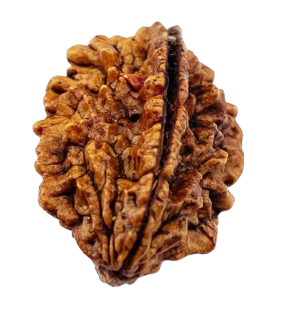
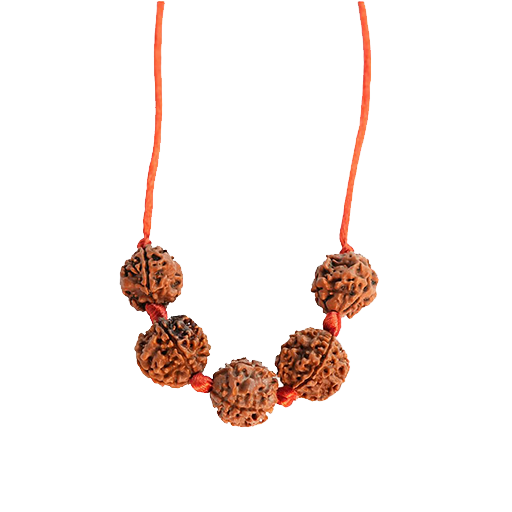



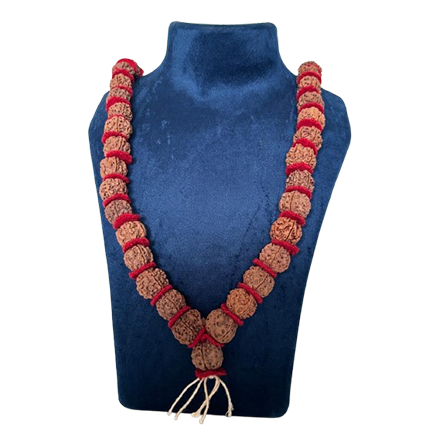













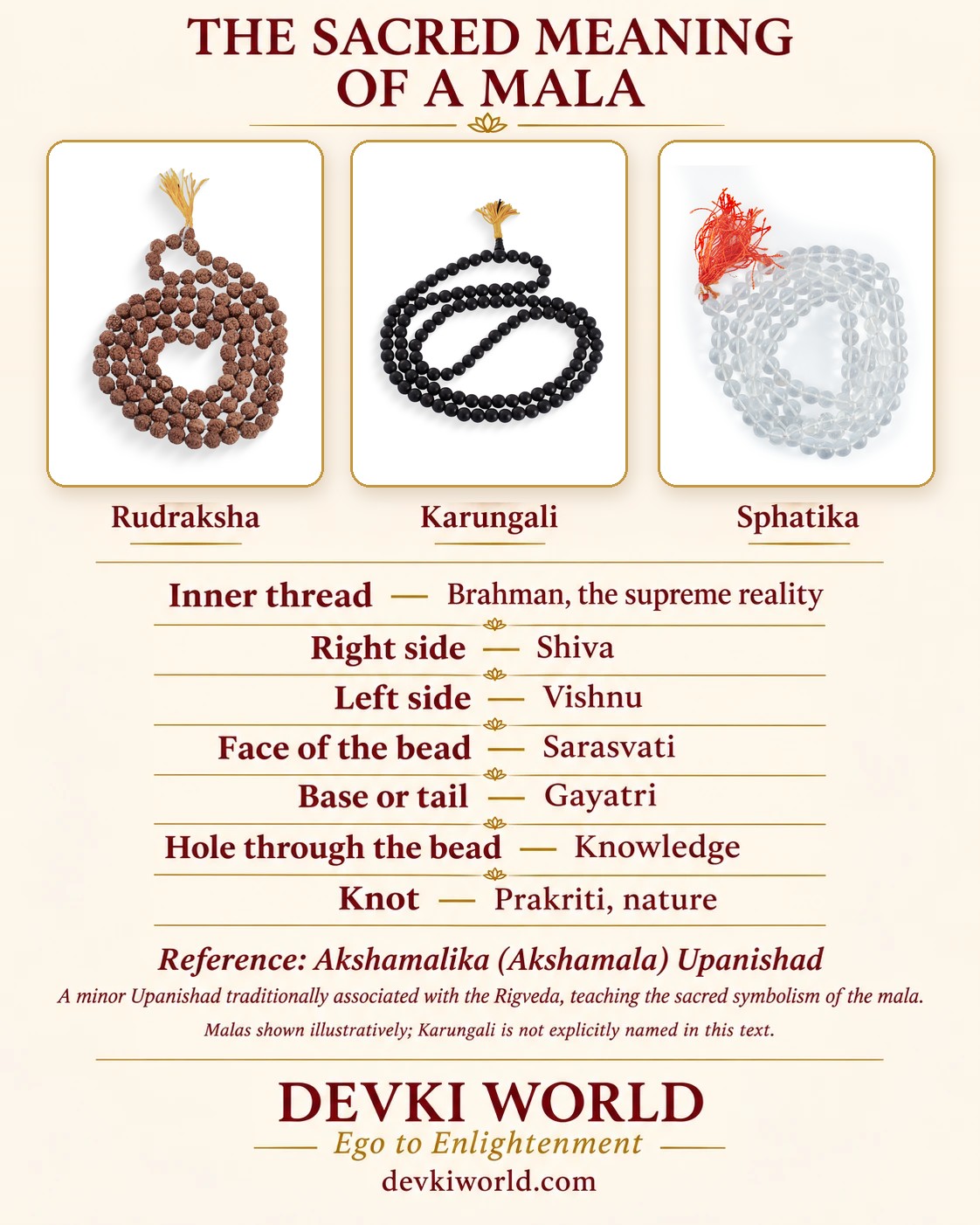
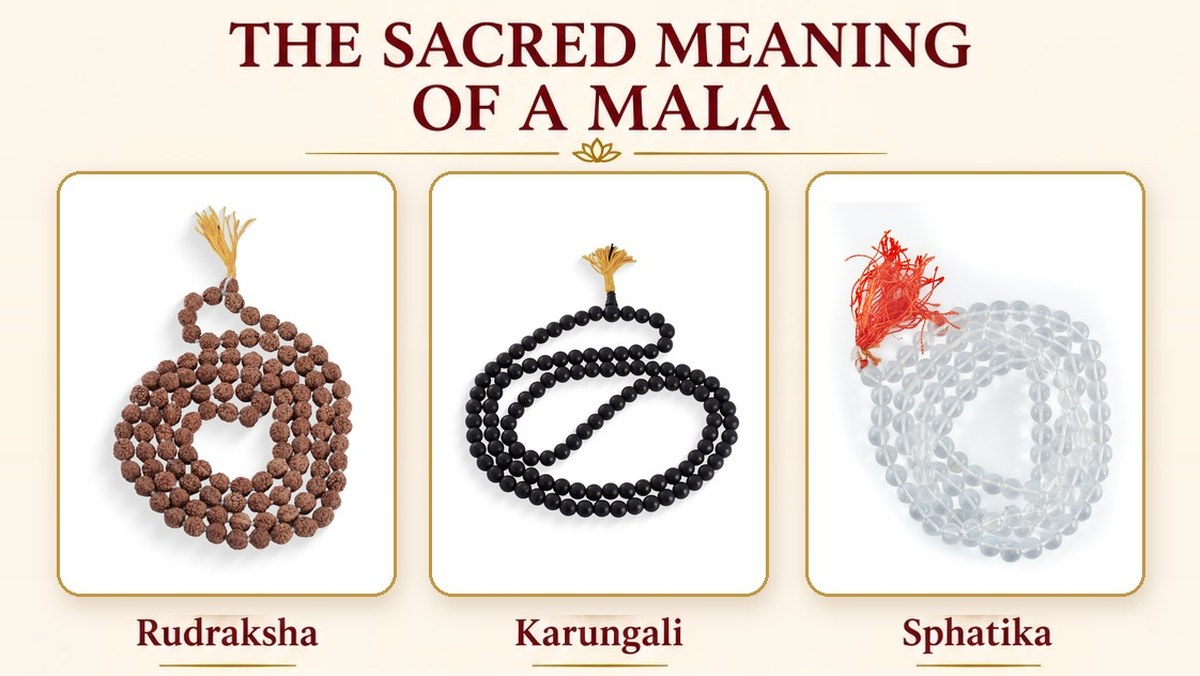
The malas in the picture: Rudraksha Japa Mala · Karungali Mala · Sphatika Mala
A mala rests in your hand. Your fingers move from one bead to the next as you repeat a mantra. Alongside this familiar practice lies a rich tradition of contemplation.
The Akshamalika Upanishad describes sacred meanings within the mala’s construction, inviting the practitioner to recognise each part as a reminder of divinity, knowledge and nature.
A scripture devoted to the mala
The Akshamalika Upanishad is a minor Upanishad traditionally associated with the Rigveda and classified among the Shaiva Upanishads. It takes the form of a dialogue between Prajapati and Guha, also known as Kartikeya or Skanda.
Prajapati asks how a mala should be made, consecrated and understood. Guha’s response brings together materials, mantra and symbolism.
Its teaching provides a devotional context for the mala: an object prepared and approached with spiritual attention.
Seven sacred correspondences
The text associates the mala’s parts with the following meanings:
| Part of the mala | Symbolic meaning |
|---|---|
| Inner thread | Brahman, the supreme reality |
| Right side | Shiva |
| Left side | Vishnu |
| Face of the bead | Sarasvati |
| Base or tail | Gayatri |
| Hole through the bead | Knowledge |
| Knot | Prakriti, nature |
These associations belong to the text’s ritual and contemplative framework. The right and left sides relate to its prescribed construction; they should not be treated as universal instructions for locating deities on any commercially available necklace.
The thread and the many beads
The inner thread’s identification with Brahman offers a particularly meaningful starting point for reflection.
We notice the individual beads, yet the thread holds the whole mala together. Drawing on this image, we can contemplate how diversity may rest upon an underlying unity.
This is an interpretive reflection inspired by the text’s symbolism—not a literal quotation or a promise that wearing a mala produces self-realisation.
Knowledge at the centre
The opening through each bead is associated with knowledge, while the knot represents Prakriti, or nature.
For a contemporary practitioner, these correspondences can prompt questions: Am I repeating my mantra attentively? What am I learning about my thoughts? How does my practice influence my conduct?
Such questions are a practical reflection on the symbolism, rather than additional instructions stated by the Upanishad.
Sacred sound and consecration
The text also describes the invocation of Sanskrit letters into the beads. The mala is contemplated as a bearer of sacred sound and addressed as the mother of mantras.
Its consecration involves purification, offerings and invocations. These details show the care with which the practice is approached. A photograph of a mala, including the illustration accompanying this article, represents the theme artistically; it does not demonstrate that the prescribed ritual has been performed.
For a formal mantra practice, follow the guidance of your teacher or tradition.
Bringing the teaching into daily practice
Before beginning japa, pause. Remember your intention. Let the movement from bead to bead help you return your attention to the mantra.
The symbolism offers a way to approach a familiar object with renewed reverence. Its value becomes personal through practice, reflection and the way we live.
At Devki World, we share these teachings to encourage an informed relationship with sacred objects—grounded in their sources and approached with sincerity.
Malas from Devki World
Devki World — Ego to Enlightenment
Rooted in Shastra & Guided by Trust
devkiworld.com
Research by Bhat Acharya